China Top 10 Linear LED Lights to Achieve Wall Washing?

Time:2026-10-01 Author:Sophia
0%

A successful wall wash begins with control, not brightness. How to achieve a "wall wash" effect with linear LED lighting? The answer depends on beam distribution, installation distance, surface texture, and optical quality. This guide introduces China’s top 10 linear LED lights for wall washing, focusing on practical performance rather than attractive specifications alone.

Lighting designer Randall Whitehead is often credited with the useful principle, “Good lighting is not about seeing more; it’s about seeing better.” That idea applies directly to wall washing. A powerful strip placed too close to a wall may create bright scallops, harsh shadows, and uneven corners. A well-designed linear fixture can produce a smoother gradient across stone, plaster, wood, or painted surfaces. Small details matter.

Look for asymmetric or wide-beam optics, stable lumen output, high color rendering, and suitable color temperatures. A 3000K fixture may reveal warm stone beautifully, while 4000K can make commercial interiors appear cleaner. Aluminum housings also help control heat during long operating hours. Do not ignore glare.

The following selection considers beam angle, mounting flexibility, dimming compatibility, protection ratings, and field experience. Some products may perform differently because walls, ceilings, and installation tolerances vary. That is the uncomfortable part. No linear LED light can correct poor spacing or careless aiming.

Testing a short sample before full installation remains wise. It can expose problems early. This comparison aims to help designers, contractors, and buyers choose more confidently, while recognizing that real projects still require measurement, mock-ups, and professional lighting judgment.
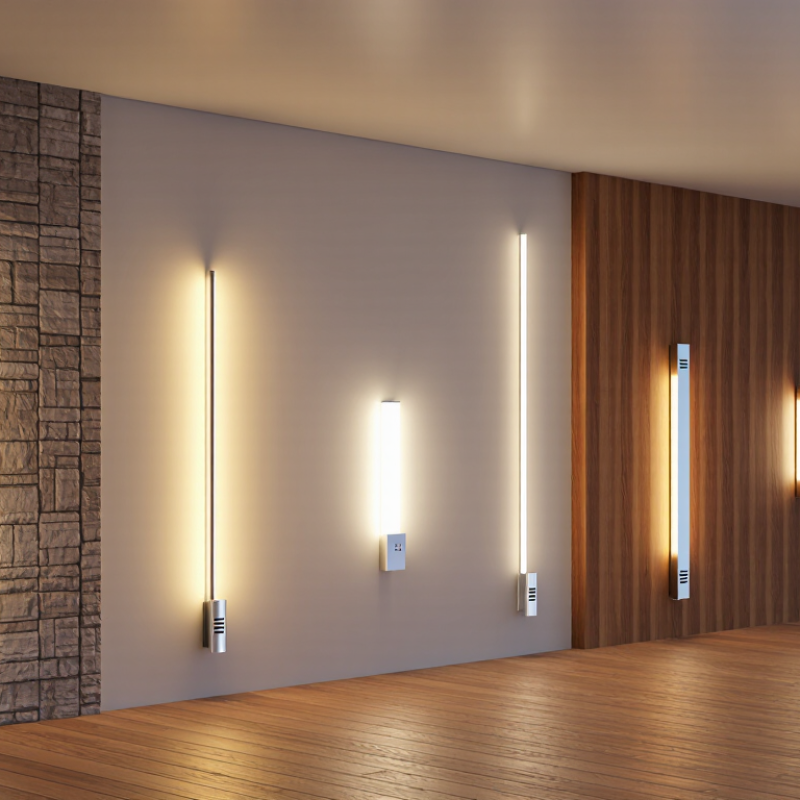
China Top 10 Linear LED Lights to Achieve Wall Washing?

What Are Linear LED Lights and How Do They Create Wall-Washing Effects?

Linear LED lights are slim fixtures built with a continuous row of light-emitting diodes. Their narrow profiles fit neatly along ceilings, walls, shelves, and architectural edges. Unlike a single spotlight, they spread light across a longer area. This makes them useful for wall washing, where light reaches a vertical surface evenly. The result can reveal stone texture, painted finishes, or subtle interior details.

A successful wall-washing effect depends on more than brightness. The fixture needs suitable optics, beam distribution, and mounting distance. Installers often place it near the wall, but not directly against it. A wider wall may require several connected fixtures with consistent color output. High color rendering helps surfaces look natural. Adjustable white light can also change the atmosphere from cool and clean to warm and relaxed. In wet or dusty areas, check the appropriate protection rating.

Practical testing remains important. Measure the wall after dark, because daylight can hide uneven patches. The first layout is rarely perfect. Hot spots may appear beneath the fixture, while distant sections look weak. Small changes in spacing or tilt can improve the result. Heat management also matters, especially inside concealed channels. A reliable design includes accessible wiring, stable aluminum housing, and controls that avoid sudden glare. Some projects still overuse brightness, which can flatten texture instead of enhancing it. Better wall washing usually comes from balance, not maximum output.

Key Features to Evaluate in China-Made Wall-Washing Linear LED Lights

Choosing among China-made linear LED lights for wall washing requires more than comparing price and wattage. Start with the optical system. A narrow beam can create sharp bands, while a wider lens produces softer, more even illumination. Check the spacing between the fixture and wall, then match the beam angle to the surface height. Ask for photometric files, not only attractive showroom photographs. Real walls often reveal dark gaps.

Material quality also deserves close inspection. Look for a rigid aluminum housing, reliable heat dissipation, and sealed connectors. IP65 may suit sheltered exteriors, while exposed installations may require stronger protection. Confirm the rated ambient temperature and test results. A fixture can feel solid but still overheat after several hours. That detail is easy to miss.

Evaluate color consistency, too. A stable color temperature and high color-rendering index help stone, brick, and painted surfaces look natural. Check the binning tolerance between fixtures. Slight differences become obvious across a long façade. Flicker performance matters near cameras and moving viewers. Confirm dimming compatibility, control protocols, cable length, and installation brackets before ordering. Request aging tests, waterproofing records, electrical reports, and a clear warranty. Documentation may appear less exciting than brightness, but it protects the project when conditions change. I have seen specifications look excellent on paper, yet the final effect needed extra adjustment. That is a useful warning. Sample testing on the actual wall remains essential.

China’s Top 10 Linear LED Lights for Professional Wall Washing

China’s Top 10 Linear LED Lights for Professional Wall Washing

China’s top ten linear LED solutions are defined by performance, not appearance alone. Professional projects usually need narrow, medium, and asymmetric beam options for different wall distances. High colour rendering matters too. A CRI of 90 or above helps reveal stone, timber, and painted surfaces accurately. The U.S. Department of Energy’s solid-state lighting reports identify commercial LED efficacy above 150 lm/W, but efficiency should not replace optical control. A bright fixture can still create harsh stripes.

The strongest options typically include aluminium housings, pressure-equalised sealing, and IP66 protection for exposed façades. Constant-current drivers reduce visible flicker and colour shifts. DALI, DMX, or addressable control supports precise dimming across long elevations. The Zhaga Consortium also promotes modular LED interfaces, which can simplify future maintenance and upgrades. Useful details include 24V or 48V operation, 3-step MacAdam colour consistency, and TM-30 data beside ordinary CRI figures. Keep it practical.

The International Energy Agency reports that LED products now represent more than half of global lighting sales, showing how quickly solid-state lighting has matured. Yet wall washing remains installation-sensitive. Beam angle, mounting height, surface texture, and cable voltage drop can change the final result. I would test a short mock-up before ordering hundreds of metres. Sometimes the “top” fixture looks excellent in a catalogue and disappointing on a real wall. Photometric files, thermal tests, warranty terms, and spare-part availability deserve equal attention.

How to Compare Beam Angles, Brightness, Color, and Installation Methods

China Top 10 Linear LED Lights to Achieve Wall Washing?

A successful wall-washing project starts with beam angle, not wattage. Narrow beams create bright stripes and visible gaps. Wider beams produce softer, more uniform surfaces. For a 3-meter wall, many installers begin with 24–36 degree optics, then adjust spacing through a mock-up. Start with the wall. The U.S. Department of Energy reports that commercial LED luminaires can exceed 100 lumens per watt, but efficiency alone cannot predict visual quality (DOE, Solid-State Lighting R&D Opportunities, 2023).

Brightness should be compared through delivered lumens, not input power. A 1,000-lumen fixture may lose output through lenses, housing, and installation angles. Check photometric files, lumen maintenance, and LM-79 test results. The Illuminating Engineering Society recommends evaluating glare, uniformity, and vertical illuminance together. A useful target is often 200–500 lux on textured architectural surfaces, although darker finishes may require more output. More light is not always better.

Color selection also changes the wall’s character. Warm white around 2700–3000K suits hospitality interiors, while 3500–4000K can reveal cleaner commercial details. Specify CRI 90 or higher when artwork, stone, or wood needs accurate rendering. CIE 224:2017 notes that color appearance depends on both chromaticity and viewing conditions. Installation matters just as much. Recessed channels hide glare, surface mounting simplifies maintenance, and adjustable brackets correct uneven facades. I have seen technically strong fixtures fail because installers skipped a night test. Recheck spacing, aiming, and shadows after installation. Some projects still need revision.

China Top 10 Linear LED Lights to Achieve Wall Washing

How to compare beam angles, brightness, color, and installation methods. The chart uses ten representative linear LED wall-washing configurations rather than company or brand rankings.

Narrow 10°–24° beams create stronger vertical accents and are suitable for greater setback distances. Wider 36°–90° beams provide softer and more uniform coverage for façades and interior walls. Brightness is shown as typical luminous flux per meter; actual wall illuminance depends on mounting distance, surface reflectance, optics, and dimming. Warm white color temperatures around 2700–3000K suit hospitality and residential spaces, while 4000–5000K is commonly used for commercial and architectural applications. Surface-mounted brackets are flexible, recessed profiles offer a cleaner appearance, and adjustable brackets help fine-tune the grazing angle.

Where to Use and How to Maintain Wall-Washing Linear LED Lights

China Top 10 Linear LED Lights to Achieve Wall Washing

Where to Use and How to Maintain Wall-Washing Linear LED Lights

Wall-washing linear LED lights work best where surfaces deserve visual attention. Use them on hotel façades, museum walls, retail displays, corridors, and landscaped structures. A narrow beam can emphasize textured stone, while a wider beam creates softer coverage on painted walls. Measure the wall height before choosing the fixture. A light placed too close may create bright stripes and dark gaps. That mistake is common.

For outdoor façades, select fixtures with suitable IP protection, corrosion-resistant housing, and reliable drainage. Confirm the color temperature with the surrounding architecture. Warm white often suits brick and hospitality spaces, while neutral white reveals concrete and artwork more clearly. Install adjustable brackets when possible. They make aiming easier after sunset. My field experience suggests checking glare from pedestrian viewpoints, not only from the installer’s position. The first result can look impressive, yet still feel uncomfortable.

Maintenance begins with a documented inspection schedule. Remove dust, insects, and water stains using a soft cloth and approved cleaning solution. Avoid abrasive pads, strong solvents, and high-pressure water. Inspect lenses, seals, cables, connectors, and mounting hardware every few months. Look for flickering, color differences, moisture, or unusual heat. Clean ventilation paths around drivers and keep them away from trapped heat. Replace damaged gaskets promptly. A small seal failure can become an expensive repair. Record each service visit, although many teams forget this simple step. Qualified electrical professionals should test power connections and isolate circuits safely before servicing.

China Top 10 Linear LED Lights to Achieve Wall Washing? - Where to Use and How to Maintain Wall-Washing Linear LED Lights

A practical comparison of common linear LED wall-washing configurations, including recommended applications, optical performance, installation conditions, and maintenance requirements.

Rank Linear LED Light Configuration Typical Power Recommended CCT CRI Typical Efficacy Beam / Optics Ingress Protection Recommended Wall-Washing Height Best Application Maintenance Guidance
1 Exterior asymmetric wall-washer bar 18–30 W/m 3000 K or 4000 K ≥80 90–115 lm/W Asymmetric 15° × 45° or 20° × 50° IP66 3–8 m Building façades, entrance walls, commercial exteriors Clean the lens every 6–12 months; check cable glands and mounting clips after severe weather.
2 RGBW addressable linear wall washer 20–36 W/m RGB + 3000–6000 K white ≥80 for white channel 55–85 lm/W in white mode 15°–30° asymmetric optics IP66 3–10 m Landmark façades, bridges, themed spaces, event lighting Inspect DMX or pixel-control connections; keep power supplies ventilated and replace damaged seals promptly.
3 Recessed in-ground linear wall washer 12–24 W/m 2700–4000 K ≥80 75–100 lm/W Asymmetric 10° × 40° or 15° × 45° IP67 2–5 m Plazas, pedestrian paths, retaining walls, landscape features Remove leaves and sediment from the housing; confirm drainage remains open and inspect the top glass for cracks.
4 High-output façade linear washer 30–45 W/m 3000 K or 4000 K ≥80; ≥90 optional 95–125 lm/W 20° × 40° or 20° × 60° IP66 6–15 m High-rise façades, museums, large public buildings Schedule annual photometric and electrical inspection; verify thermal clearance and tighten adjustable brackets.
5 Low-glare indoor wall-washing profile 10–18 W/m 3000 K or 4000 K ≥90 85–110 lm/W Asymmetric 20° × 50°; optional glare shield IP20–IP44 2–4 m Galleries, retail interiors, hospitality spaces, corridors Dust the lens and reflector quarterly in dusty locations; avoid abrasive cleaners on the optical surface.
6 Continuous cove wall-washing system 8–16 W/m 2700–4000 K ≥90 90–120 lm/W 120° indirect distribution or asymmetric lens IP20–IP65 1.5–4 m Ceilings, coves, restaurants, offices, residential interiors Inspect connectors and dimming modules; maintain a clean heat-sink surface and replace discolored diffusers.
7 Adjustable-angle linear wall washer 15–28 W/m 3000 K, 4000 K, or 5000 K ≥80 85–110 lm/W Adjustable 15°–45° tilt; interchangeable lenses IP65–IP66 3–8 m Renovation projects, uneven façades, architectural accents Check tilt locks and fasteners twice a year; clean lenses before re-aiming to preserve uniformity.
8 Narrow-profile architectural washer 8–15 W/m 2700–4000 K ≥80; ≥90 optional 80–105 lm/W 10°–20° narrow asymmetric beam IP65 2–5 m Window reveals, columns, narrow façades, decorative details Inspect concealed wiring and end caps; keep the narrow optical aperture free from dust and insects.
9 Tunable-white linear wall washer 14–24 W/m 2200–6500 K ≥90 75–105 lm/W 20°–40° asymmetric beam IP20–IP65 2–6 m Hotels, museums, offices, wellness and retail environments Test color-control channels annually; check drivers for overheating and recalibrate scenes after component replacement.
10 Solar-powered outdoor linear wall washer 6–15 W/m 2700 K or 3000 K ≥80 70–95 lm/W 15°–30° asymmetric optics IP65–IP67 2–5 m Remote landscapes, gardens, low-energy public projects Clean photovoltaic panels monthly or quarterly; test battery capacity before winter and check the charging controller.

FAQS

What makes a linear LED light suitable for professional wall washing?

It should offer controlled beam angles, strong colour rendering, and stable output. Narrow, medium, and asymmetric beams suit different wall distances. Brightness alone is not enough. Harsh stripes can still appear.

Which colour quality specifications should I check?

Look for a CRI of 90 or above when lighting stone, timber, artwork, or painted surfaces. Also request TM-30 data and consistent colour ratings. Three-step colour consistency can reduce visible differences between fixtures.

What protection is important for outdoor façades?

Choose an aluminium housing, corrosion resistance, reliable drainage, and suitable IP66 protection. Inspect seals after installation. Water finds weak points.

How should I choose the beam angle?

Match the beam to wall height, mounting distance, and surface texture. Narrow beams emphasize textured stone. Wider beams create softer coverage on painted walls. Test the result before ordering large quantities.

Where can wall-washing linear lights be used?

They suit hotel façades, museum walls, retail displays, corridors, and landscaped structures. Warm white can complement brick and hospitality spaces. Neutral white may reveal concrete more clearly.

What control and power features are useful?

Constant-current drivers can reduce visible flicker and colour shifts. Dimming systems allow precise control across long elevations. Low-voltage operation may use 24V or 48V power. Check voltage drop along long cable runs.

How can I avoid glare and uneven lighting?

Use adjustable brackets when possible, then aim the fixtures after sunset. Check glare from pedestrian viewpoints, not only from the installer’s position. A catalogue image may hide uncomfortable brightness.

How should these lights be maintained?

Inspect lenses, seals, cables, connectors, and mounting hardware every few months. Remove dust and water stains with a soft cloth and approved cleaner. Avoid abrasive pads, strong solvents, and high-pressure water. Record every service visit. Teams often forget.

What should I test before placing a large order?

Build a short wall mock-up and review it at night. Check beam spacing, colour consistency, glare, heat, and surface coverage. Request photometric files, thermal test results, warranty terms, and spare-part details. The first trial may disappoint. That is useful information.

Conclusion

Linear LED lights are versatile fixtures designed to provide continuous, even illumination along walls, ceilings, façades, and architectural structures. This guide explains how they create smooth wall-washing effects by combining suitable beam angles, consistent brightness, proper spacing, and accurate aiming. It also reviews the key features of China-made linear LED lights, including color temperature, color rendering, waterproof protection, heat management, dimming compatibility, housing quality, and installation flexibility.

The article presents ten professional linear LED lighting options for wall washing and explains how to compare their beam distribution, lumen output, color performance, mounting methods, and control systems. It also answers the practical question: How to achieve a "wall wash" effect with linear LED lighting? Readers will learn how to select fixtures according to wall distance, surface texture, project scale, and desired atmosphere, as well as how to use these lights in commercial, residential, hospitality, landscape, and architectural applications. Basic maintenance guidance is included to support stable performance and long service life.

Sophia

Sophia

Sophia is a dedicated marketing professional with an exceptional depth of knowledge about her company's products and services. With a keen understanding of market trends and customer needs, she crafts insightful blog posts that not only inform but also engage readers, enriching the company’s online......