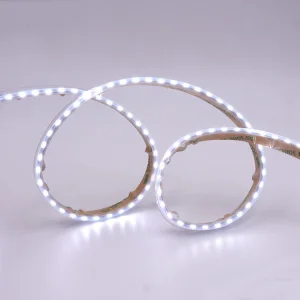
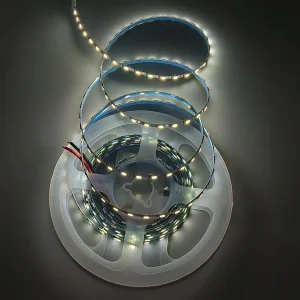
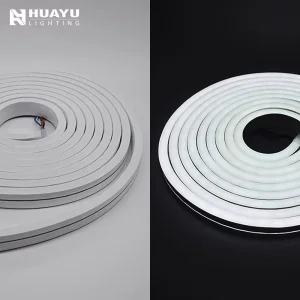
Explore our highly engineered low-voltage dynamic, static, and pixel-addressable linear light engines designed for professional architectures.
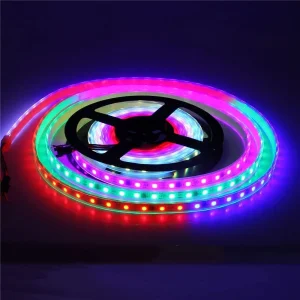
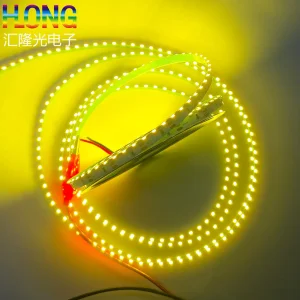
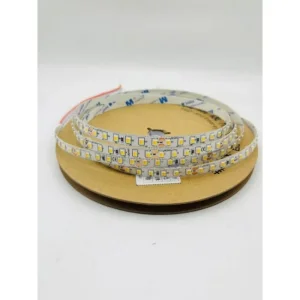
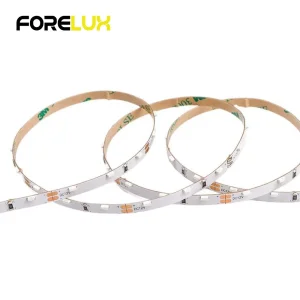
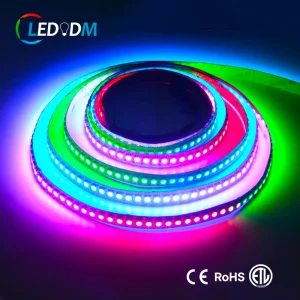
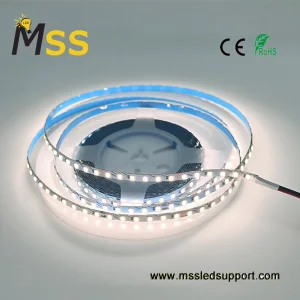
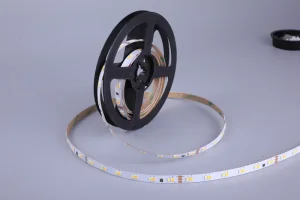
In the global commercial and industrial lighting sectors, 12V Flexible LED Ribbons represent a foundational low-voltage standard. The choice of 12V DC systems is driven primarily by safety standards, localized thermal limitations, and circuit segmentation requirements. Unlike high-voltage AC equivalents, 12V systems run well below the Safety Extra Low Voltage (SELV) threshold of 50V AC or 120V ripple-free DC, making them the standard choice for architectural coves, custom cabinetry, marine cabins, and display fixtures where direct human contact is possible.
From a procurement perspective, global supply chain managers analyze critical failure points before onboarding an OEM partner. These points include copper weight on the Flexible Printed Circuit (FPC)—ideally 2oz to 3oz to mitigate voltage drop—and color-rendering metrics represented by the TM-30-15 standard. Additionally, binning standards based on the MacAdam Ellipse (ideally 3-step SDCM) are vital for maintaining consistency across high-volume shipments.
"With the acceleration of solid-state lighting integration, global B2B procurement demands strict compliance with IEC 60598-2-21 standards alongside certified performance guarantees."
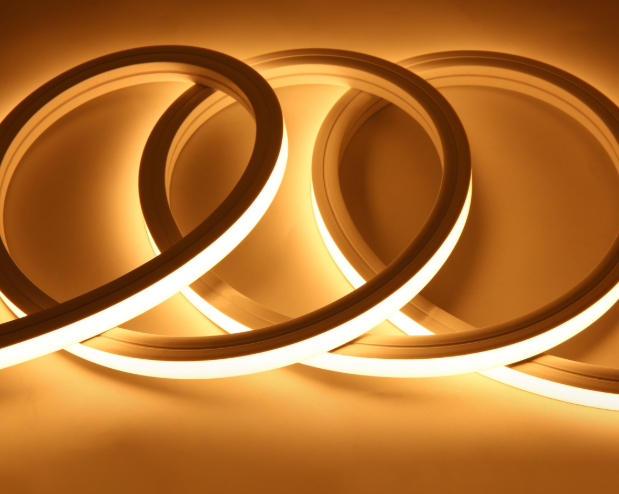
A major challenge in low-voltage linear lighting design is voltage drop, which is the loss of electrical potential along the length of the flexible ribbon. Because voltage drop is inversely proportional to system voltage ($V = I \times R$), a 12V system requires double the current of a 24V system to deliver the same power. This makes high-grade FPC substrates and precise PCB trace routing essential.
Engineers at Zhejiang Zionsville Lighting Co., Ltd. address this physical limitation by using advanced 3oz copper FPC and incorporating constant current integrated circuits directly onto individual segments of the LED strip. This configuration ensures that even at lengths of 5 to 10 meters, there is no noticeable drop in brightness, maintaining high luminous efficacy across the entire run.
Uncompromising quality systems, engineering depth, and advanced solid-state testing facilities.
Our dedicated team provides rapid, customized solutions, releasing new product series annually. We offer complete OEM/ODM options, including customized tooling and private labeling, without extra fees.
Our in-house laboratory is equipped for integrating sphere testing, thermal cycling, moisture chamber testing, mechanical twist testing, and electrical IES file generation. This guarantees high quality and durability.
Our products are fully certified with ETL, TUV, CE, and RoHS approvals. Our manufacturing facility operates under the ISO9001:2015 quality management system to ensure consistent global compliance.
A reference guide for choosing between SMD, COB, and Digital Addressable Pixel structures.
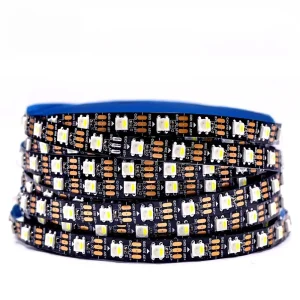
Selecting the right flexible light engine requires analyzing the interaction between density, chip packaging, and signal control. Modern architectural layouts often require dotless illumination, which has led to the development of FCOB (Flip-chip-on-board) structures. Alternatively, stage designs and dynamic media façades require addressable pixel control, which utilizes integrated circuit interfaces like WS2811, SK6812, or the backup-line WS2815.
| Technology Class | LED Density / Meter | Color Rendering (CRI) | IP Rating Scope | Optimal Application |
|---|---|---|---|---|
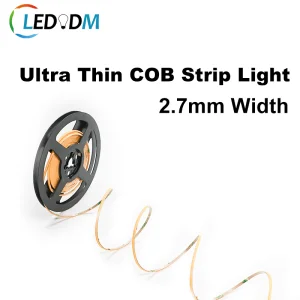
| COB (Dotless FCOB) | 320 to 480 chips/M | Ra > 90 / R9 > 50 | IP20 - IP67 silicone jacket | Flush linear cabinet profiles & close-range visual integration |
| Dynamic Pixel (WS2815) | 30 to 144 pixels/M | Ra > 80 (RGB gamut) | IP20 - IP68 extrusion | Media walls, entertainment spaces, & architectural animations |
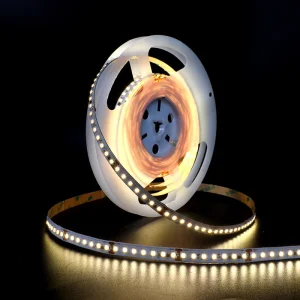
| Static High Efficacy (2835 SMD) | 60 to 240 LEDs/M | Ra > 85 / Ra > 95 (CQS) | IP20 - IP69K silicone tube | Commercial coves, indirect task illumination & outdoor facades |
| Side-Emitting (3014/335) | 60 to 120 LEDs/M | Ra > 80 | IP20 - IP65 | Curved signage contouring & architectural millwork |
Each package class has unique thermal properties. Standard SMD solutions use wire bonds and lead frames, while COB (Chip on Board) uses flip-chip technology. In flip-chip designs, the silicon die is bonded directly to the FPC, improving heat dissipation and color uniformity while preventing standard thermal-stress failures.
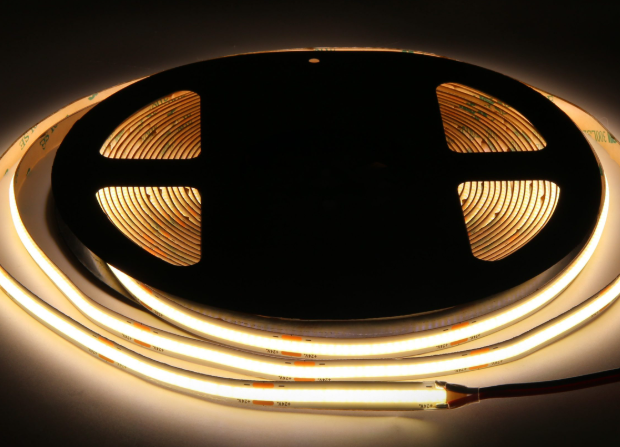
Linear lighting has evolved from simple accent illumination into a primary architectural component. Modern projects use flexible LED ribbons for custom structures like acoustic panels, wall-wash elements, and external cladding.
For exterior structures, thermal cycles and UV radiation present significant challenges to traditional PVC-jacketed LED neon lights. Zhejiang Zionsville Lighting has developed co-extruded silicone LED neon products that remain flexible and resist yellowing under extreme UV index exposures. Additionally, our IP69K rated linear fixtures are built to withstand high-pressure, high-temperature washdowns in commercial kitchens and industrial food-processing facilities.
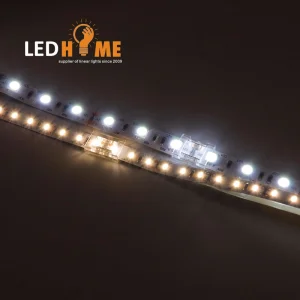
Inside buildings, our Tunable White (CCT) systems mimic natural daylight. These systems dynamically adjust color temperature from 2700K to 6500K throughout the day, supporting circadian rhythms in corporate offices and healthcare facilities.
Addressing the practical engineering and installation questions of B2B procurement managers and lighting specifiers.
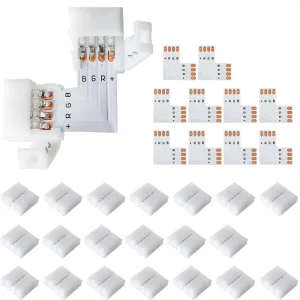
Explore our system accessories, narrow-width PCB designs, and flexible neon solutions to complete your linear lighting installation.
 Zionsville Lighting